


Loneliness in university
Table of contents
Table of contents
Loneliness in University: Feeling Alone Despite Being Surrounded by People
23.04.2026
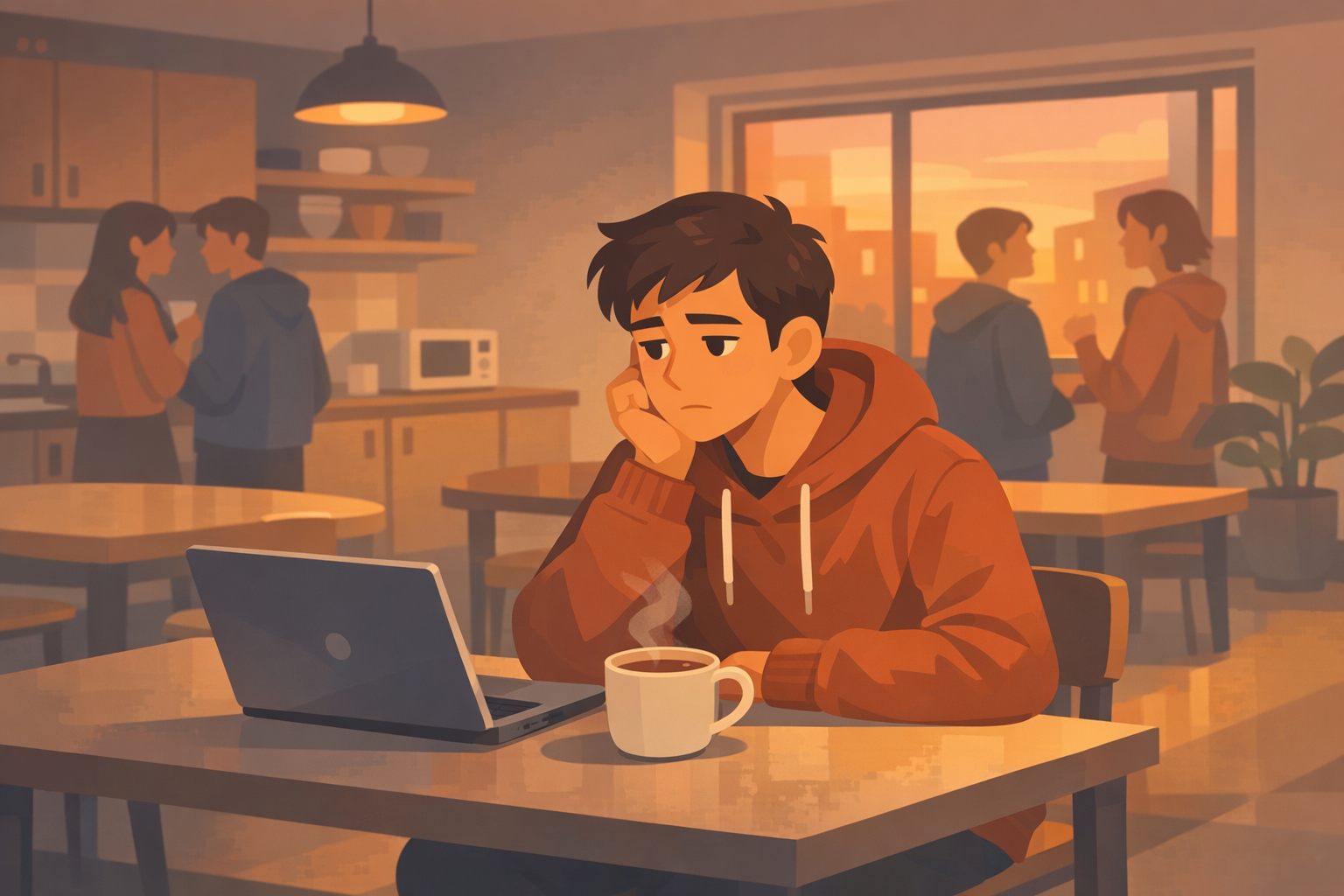
For many, student life is considered one of the most exciting phases of life. A new city, new people, and new experiences. Yet for many students today, reality often looks different: despite full lecture halls, classes, and social media, many young people feel lonely.
Especially since the pandemic, loneliness in university is no longer a marginal phenomenon. On the contrary—many students are frequently affected by loneliness. During the COVID-19 pandemic, students had very limited opportunities to build social connections. Contact restrictions and fewer chances to meet new people led to social isolation for many. You would sit in a seminar or the cafeteria, surrounded by people, yet still often feel alone.
Why loneliness is so common in university
The reasons why students feel lonely are diverse. It often begins in the very first semester—even during orientation week.
A major life change: a new city, a completely new social environment, and the pressure to fit in—this can quickly become overwhelming. While others seem to make new connections effortlessly, some find it more difficult to build new friendships.
Of course, the structure of university life also plays a major role. Lectures in large halls often offer little interaction. You sit next to each other, but not with each other—and this can intensify the feeling of isolation.
Feeling lonely despite having many contacts
The feeling of being lonely despite having many contacts can be very stressful.
You follow each other on social media, you might see each other regularly at university—and yet, the real connection is missing. Social media can connect people, but it often does not replace real-life interactions. This is exactly why many young adults end up feeling lonely.
Loneliness is not only about being alone—it is also about the feeling of not belonging.
What loneliness does to you
The pandemic has clearly shown that long-term loneliness can affect our mental health.
Typical consequences include:
- Difficulty concentrating in university
- Sleep problems
- Inner restlessness or anxiety disorders
- Decreasing motivation
If loneliness persists over time, it can develop into chronic loneliness or social isolation. That’s why it’s important to take action.
What you can do about loneliness
Even if it feels difficult, it’s important to actively do something about it.
Build new connections—even if it feels hard
The first step is often the hardest. Still, it’s worth actively approaching others.
Possible ways include:
- Study groups in your seminars
- Conversations in the cafeteria
- Shared activities in university sports
These are often places where real friendships develop—without pressure to perform. Even if you are new to a city, you can take small, intentional steps. Step by step—as explained in this article on “Find friends in a strange city”.
Use places where connections naturally happen
There are many situations in everyday life where you can meet new people. Especially at the beginning of the semester or during orientation week, it is easier for many to approach others.
A semester abroad can also be an opportunity to connect with others—as well as volunteering or student initiatives.
What matters most: friendships develop through repeated interaction, not through scrolling on Instagram or TikTok.
Accept support
If you notice that loneliness is affecting you, you can seek professional support.
There are various points of contact—also near you:
- Student advisory services
- Psychological counseling centers
- Nightline (a listening and support hotline run by students for students)
- In cases of acute emotional distress, you can also contact the Telephone Crisis Hotline—free and anonymous help
What’s important: seeking professional help is not a sign of weakness, but an important step toward feeling better.
Use the Staytoo community consciously
In furnished apartments like Staytoo, you have an advantage that many underestimate: you are not alone—you are part of a community.
Many students and trainees live in the same location—often facing similar challenges in everyday life. This creates an ideal foundation for building new connections in a simple and natural way.
In shared spaces, through joint activities, or even casual everyday conversations, the first real connections often emerge. If you approach others openly and make use of these opportunities, you will quickly notice that feelings of loneliness decrease and a stronger sense of belonging develops.
You are not alone
Loneliness in university affects many people—even if it is not always visible.
It is completely normal to feel lost or alone from time to time. What matters is realizing that there are ways to deal with it.
Even small steps, new connections, and the willingness to accept support can make a difference—and help you feel connected again. In the end, it’s not about the number of contacts, but about real connections that support you in the long term.